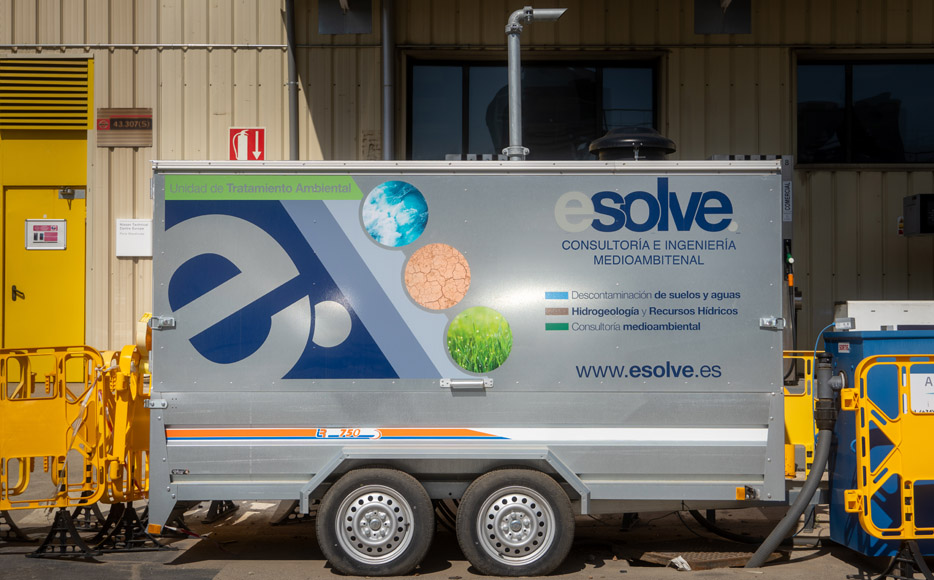
Recovering territories: a long-term environmental, social and economic investment

The recovery of polluted soil and water has become one of the great environmental and territorial challenges of the coming decades. Former industrial areas, closed landfills or spaces degraded by past activities today represent not only an environmental liability, but also a strategic opportunity for sustainable development.

It must be considered that these urban areas where land is very valuable to house new facilities such as schools, hospitals, parks and areas with common spaces, housing… the well-being of the people must be ensured and this involves regenerating the subsoil.

Far from being a one-off action, environmental remediation is a complex technical process that combines diagnosis, intervention and long-term monitoring. Its objective is not only to eliminate pollutants, but also to ensure that the territory can recover safe uses that are compatible with its environment and its community.

Polluted soil limits the urban, economic and social development of a territory. Their recovery makes it possible to unlock spaces that would otherwise remain unused for decades. Disused industrial areas can be transformed into productive areas, natural spaces or green infrastructures that add real value to the territory.

In addition, these processes reduce risks to human health, improve environmental quality and contribute to more efficient territorial planning, aligned with the objectives of sustainability and circular economy.

Decontamination has a direct effect on ecosystems. Improving soil and water quality promotes the recovery of basic ecological functions and allows biodiversity to be progressively re-established. This process, based on scientific and technical criteria, is key to restoring environmental balances that have been altered for years.

Environmental monitoring after remediation is essential to ensure the stability of results and the safety of new land uses.

Each recovery project is unique and must be approached with an in-depth knowledge of the site, its history and its context. The characterization of the terrain, the selection of appropriate technologies and the management of the associated risks are critical phases to ensure the success of the action.

We can find old industrial areas that present problems of bad smells and leaks of contaminated water as a result of poor soil recovery. Or expanding companies that want to grow responsibly and assume the environmental liabilities of the past so that they understand that they have to generate wealth in healthy environments.

Polluted soil affects the water cycle Portability is threatened by the presence of contaminants in the water and subsoil.

That is why at ESOLVE we approach environmental recovery from a comprehensive perspective, combining engineering, consulting and environmental monitoring to offer solutions adapted to each case. Our goal is to turn degraded spaces into functional, safe territories with a future.

The recovery of soil and water is not only a response to a problem of the past, but a key tool for building more resilient, sustainable territories prepared for the environmental challenges of the present and the future.
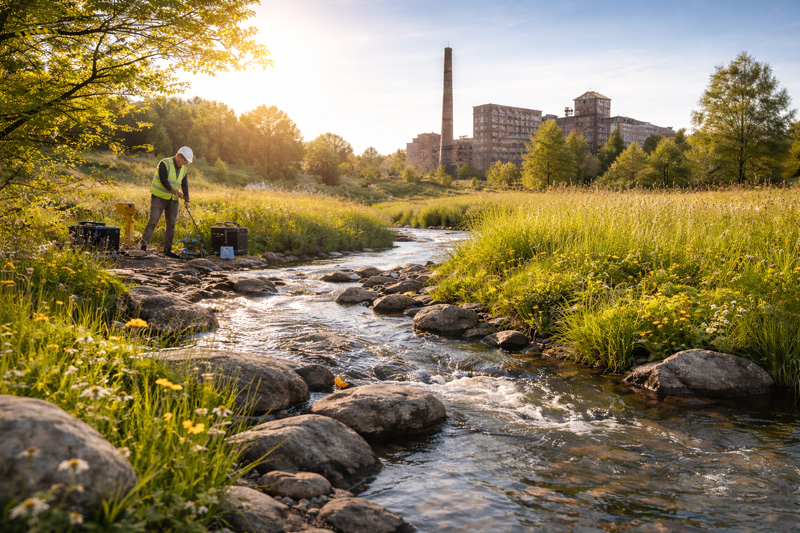

Regenerating today to protect our tomorrow: environmental balance for 2025 and keys to 2026

Talking about sustainability is no longer a trend. It is a necessity. And 2025 has been a year that has made this clear on many fronts: regulatory, technical, social and, above all, operational.

Soil and water management has gone from being a secondary issue to occupying a central place in the strategic decisions of companies and administrations. Not because of fashion, but because environmental, economic and reputational risks are more evident today than ever.

At ESOLVE we have accompanied this change from within, working on the ground and actively participating in projects where regeneration was not an option, but a responsibility.

2025: A turning point for environmental management

During this year, dynamics that were already pointed out in previous years have been consolidated, but in 2025 they have gained real weight:

  • Water protection has become a cross-cutting priority, driven by episodes of water stress and increased regulatory demands.
  • The recovery of contaminated soils has acquired a new strategic value, especially in former industrial enclaves destined to be transformed.
  • Technology applied to environmental characterization has made it possible to make more precise and better-informed decisions.
  • And, increasingly, organizations have understood that acting preventively reduces risks and generates long-term value.

This context has changed the way environmental projects are approached: it is no longer just a matter of complying, but of doing it well.

From data to decision: the value of rigorous characterization

One of the great lessons learned from 2025 has been to confirm something essential: the quality of the diagnosis conditions the entire subsequent process.

Investing in a comprehensive characterization of soil and water allows:

  • Define more effective remediation strategies.
  • Reduce technical and regulatory uncertainties.
  • Optimize time and costs.
  • And minimize impacts on existing activity.

Applied science, when integrated from the beginning of the project, ceases to be a technical requirement to become a strategic tool.

Innovation that translates into real solutions

Environmental innovation has demonstrated its true usefulness this year when it has been able to materialize in concrete solutions:

  • Less invasive remediation technologies, supporting operational continuity.
  • Predictive models and analytics tools that improve decision-making.
  • R+D projects focused on more sustainable solutions from an energy and environmental point of view.

In this context, innovation does not mean experimenting aimlessly, but rather applying knowledge with criteria and responsibility.

Regeneration is also a social commitment

Beyond the technical, 2025 has reinforced a key idea: environmental regeneration has a direct impact on people.

Every reclaimed soil and protected body of water contributes to:

  • Safer and healthier environments.
  • New opportunities for land use.
  • Greater trust between companies, administrations and citizens.

Remediation is no longer an invisible process but an action with a real impact on the environment and the community.

2026: growing demand and new opportunities

Next year will come with clear challenges: more regulatory pressure, new pollutants to control and a growing demand for well-founded environmental solutions. But it will also open up opportunities for those who are prepared.

Everything points to the fact that in 2026 we will see:

  • Greater integration of science in decision-making.
  • Companies that are more proactive and demanding of their technical partners.
  • An increasingly important role of remediation in the transition to more sustainable production models.

At ESOLVE we face this scenario with a clear conviction: the combination of technical rigour, innovation and purpose is the basis for moving forward.

Looking forward with responsibility

Regenerating soil and protecting water is not only about solving an environmental problem. It is taking care of the future, anticipating risks and assuming a real commitment to the territory.

At ESOLVE we will continue to work to provide solutions based on science, knowledge and experience, accompanying companies and administrations in projects that require precision, vision and responsibility.

Because protecting what belongs to everyone cannot wait.

ESOLVE | We look after tomorrow, regenerating polluted environments.