ESOLVE brings technical criteria and strategic vision to the Conference on soil contamination of the Waste Agency of Catalonia.

On 18 and 19 February, ESOLVE actively participated in the Conference on Soil Pollution organised by the Waste Agency of Catalonia (ARC), one of the main spaces for technical and regulatory debate in the field of soil quality in Catalonia.

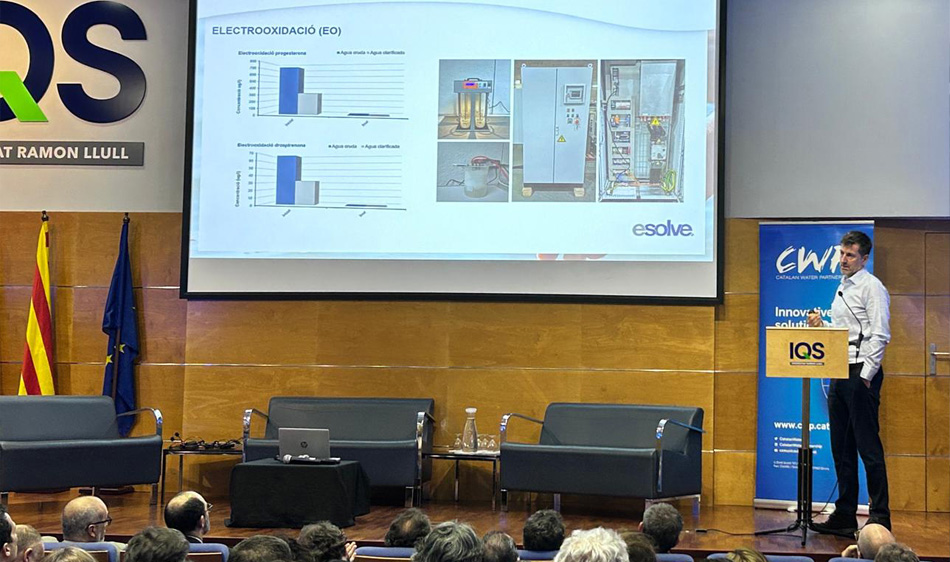
ESOLVE’s contribution was articulated in three relevant interventions. On the one hand, during the session dedicated to sustainability, ESOLVE addressed the ZLD as a strategy aimed at minimizing liquid discharge and optimizing the use of water resources, in a context marked by water scarcity and increased regulatory requirements. The approach emphasized the need to integrate advanced technology with technical criteria to ensure viable and efficient solutions.

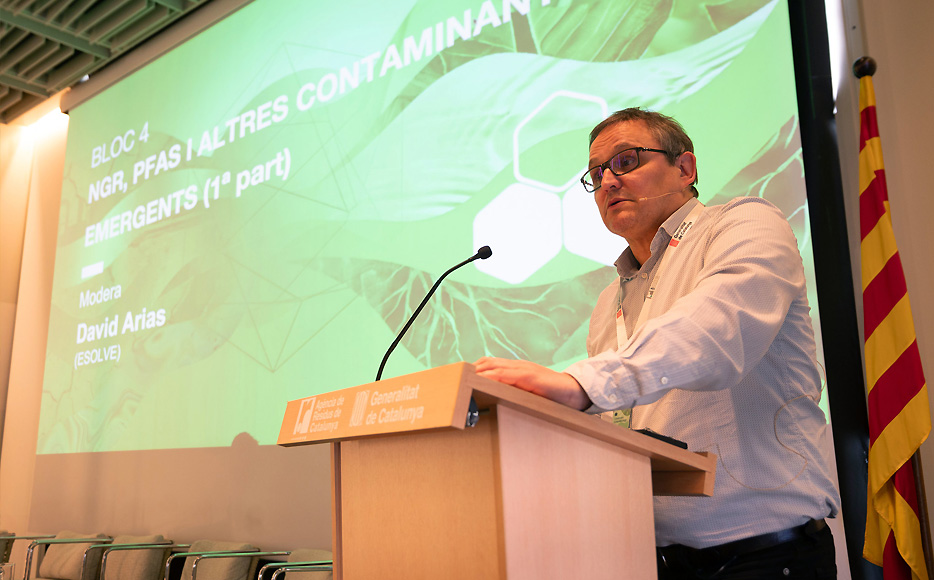
On the other hand, the company’s technical manager, David Arias, moderated block 4 dedicated to emerging pollutants, an area that currently concentrates an important part of the technical and regulatory challenges of the sector. The moderation allowed for an orderly discussion, provided technical context and facilitated reflection on the new evaluation criteria and the challenges associated with highly complex substances.

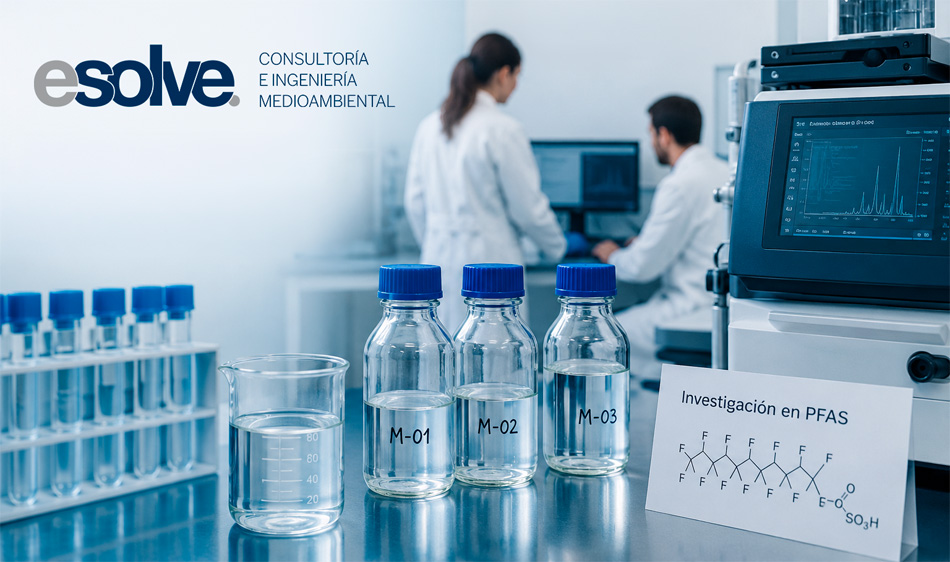
The following day, ESOLVE intervened as a speaker in the same block to present its experience in the remediation of PFAS, persistent pollutants of special environmental and regulatory concern. The company has been working for years on projects related to the research and treatment of these compounds, developing solutions based on rigorous risk analysis and the application of technologies adapted to each site.

The presentation highlighted the need to address PFAS with a specialized technical vision and anticipation in the face of an evolving regulatory framework. The experience accumulated by ESOLVE in this field reinforces its position as a consultancy prepared to face one of the great environmental challenges of the coming years.

Participation in these conferences is not only an institutional presence, but also a clear desire to actively contribute to the evolution of the sector. In a context marked by the updating of criteria such as the new NGRs and by the increase in environmental demand, the ability to provide technical criteria, applied knowledge and strategic vision becomes differential.

This line of action is aligned with the three pillars that define ESOLVE’s activity: science, innovation and sustainability. Science as a basis for sound diagnoses and informed decisions; innovation as a driving force to incorporate advanced methodologies and technologies; and sustainability as a commitment to the protection of soil and water in the long term.

With its participation in the ARC Conference, ESOLVE consolidates its position as a strategic technical agent in the field of soil and water decontamination, capable not only of executing projects, but also of anticipating scenarios and contributing to defining the standards of the sector.

ESOLVE joins the Catalan Water Partnership to promote innovation and sustainability in water management

ESOLVE | Environmental Consulting and Engineering has formalised its incorporation into the Catalan Water Partnership (CWP), the cluster that brings together leading companies and institutions in innovation and sustainability in the water sector. This strategic alliance allows ESOLVE to strengthen its mission to protect natural resources and consolidate its leadership in comprehensive solutions for soil and water decontamination.

Leadership and experience at the service of innovation

For Ricard Mora, Managing Director of ESOLVE, “being part of the Catalan Water Partnership is a key opportunity to share knowledge and establish synergies with the most relevant players in the sector. Innovation in water purification and treatment of emerging pollutants is not only a technological challenge, but a way to generate a real and measurable environmental impact”.

ESOLVE’s expertise in advanced water treatments, including remediation of emerging pollutants, innovative purification systems, and sustainable solutions based on scientific evidence, brings differential value to CWP. This collaboration reinforces the company’s capacity to develop R+D+i projects that combine technical efficiency, sustainability and social impact.

Synergies and collaborative projects

Joining CWP opens the door to new collaborative initiatives with companies, universities and research centres, promoting sustainable water management and the optimisation of industrial and municipal processes. It also allows ESOLVE to participate in projects aimed at innovation in advanced water treatments, reinforcing its commitment to comprehensive and environmentally responsible solutions.

Commitment to the future of the sector

With this alliance, ESOLVE consolidates its position as a benchmark in the soil and water decontamination sector, positioning itself as an active agent in the sustainable transformation of the water sector in Catalonia and Spain. The company reaffirms its commitment to innovation, technology and sustainability, combining technical rigour and real impact on the territory.

Regenerating today to protect our tomorrow: environmental balance for 2025 and keys to 2026

Talking about sustainability is no longer a trend. It is a necessity. And 2025 has been a year that has made this clear on many fronts: regulatory, technical, social and, above all, operational.

Soil and water management has gone from being a secondary issue to occupying a central place in the strategic decisions of companies and administrations. Not because of fashion, but because environmental, economic and reputational risks are more evident today than ever.

At ESOLVE we have accompanied this change from within, working on the ground and actively participating in projects where regeneration was not an option, but a responsibility.

2025: A turning point for environmental management

During this year, dynamics that were already pointed out in previous years have been consolidated, but in 2025 they have gained real weight:

  • Water protection has become a cross-cutting priority, driven by episodes of water stress and increased regulatory demands.
  • The recovery of contaminated soils has acquired a new strategic value, especially in former industrial enclaves destined to be transformed.
  • Technology applied to environmental characterization has made it possible to make more precise and better-informed decisions.
  • And, increasingly, organizations have understood that acting preventively reduces risks and generates long-term value.

This context has changed the way environmental projects are approached: it is no longer just a matter of complying, but of doing it well.

From data to decision: the value of rigorous characterization

One of the great lessons learned from 2025 has been to confirm something essential: the quality of the diagnosis conditions the entire subsequent process.

Investing in a comprehensive characterization of soil and water allows:

  • Define more effective remediation strategies.
  • Reduce technical and regulatory uncertainties.
  • Optimize time and costs.
  • And minimize impacts on existing activity.

Applied science, when integrated from the beginning of the project, ceases to be a technical requirement to become a strategic tool.

Innovation that translates into real solutions

Environmental innovation has demonstrated its true usefulness this year when it has been able to materialize in concrete solutions:

  • Less invasive remediation technologies, supporting operational continuity.
  • Predictive models and analytics tools that improve decision-making.
  • R+D projects focused on more sustainable solutions from an energy and environmental point of view.

In this context, innovation does not mean experimenting aimlessly, but rather applying knowledge with criteria and responsibility.

Regeneration is also a social commitment

Beyond the technical, 2025 has reinforced a key idea: environmental regeneration has a direct impact on people.

Every reclaimed soil and protected body of water contributes to:

  • Safer and healthier environments.
  • New opportunities for land use.
  • Greater trust between companies, administrations and citizens.

Remediation is no longer an invisible process but an action with a real impact on the environment and the community.

2026: growing demand and new opportunities

Next year will come with clear challenges: more regulatory pressure, new pollutants to control and a growing demand for well-founded environmental solutions. But it will also open up opportunities for those who are prepared.

Everything points to the fact that in 2026 we will see:

  • Greater integration of science in decision-making.
  • Companies that are more proactive and demanding of their technical partners.
  • An increasingly important role of remediation in the transition to more sustainable production models.

At ESOLVE we face this scenario with a clear conviction: the combination of technical rigour, innovation and purpose is the basis for moving forward.

Looking forward with responsibility

Regenerating soil and protecting water is not only about solving an environmental problem. It is taking care of the future, anticipating risks and assuming a real commitment to the territory.

At ESOLVE we will continue to work to provide solutions based on science, knowledge and experience, accompanying companies and administrations in projects that require precision, vision and responsibility.

Because protecting what belongs to everyone cannot wait.

ESOLVE | We look after tomorrow, regenerating polluted environments.