ESOLVE updates its Corporate Responsibility policy reinforcing its commitment to sustainability, safety and continuous improvement

At ESOLVE we have updated our Corporate Responsibility policy to continue advancing as a company committed to environmental sustainability, occupational health and safety, and the continuous improvement of all our processes.

This update reaffirms our commitment as an environmental consultancy and engineering specialist in soil and water decontamination, water cycle management and sustainable environmental solutions for industry.


A policy aligned with the continuous improvement principles of ISO 14001 and ISO 45001

ESOLVE’s new Corporate Responsibility policy is aligned with the principles of continuous improvement established in our management systems certified under the ISO 14001 and ISO 45001 standards.

Through this update we reinforce our way of working based on:

  • Environmental protection and pollution prevention.
  • The safety and health of workers.
  • The evaluation and minimization of environmental and occupational risks.
  • The continuous improvement of processes and services.
  • Legal and regulatory compliance.
  • Sustainability applied to industrial and environmental projects.
  • Technical innovation in environmental remediation and water treatment.
  • Transparency and corporate responsibility.

At ESOLVE we understand that environmental and safety certifications are not only a requirement, but a real tool to guarantee technical quality, prevention, traceability and constant improvement in each project.


Environmental commitment and sustainable solutions for the industry

As an environmental engineering and consulting company, we work daily on projects of:

  • Decontamination of contaminated soils.
  • Groundwater reclamation.
  • Industrial water treatment.
  • Industrial environmental management.
  • Research on emerging pollutants.
  • Environmental risk assessment.
  • Optimisation of treatment and discharge systems.

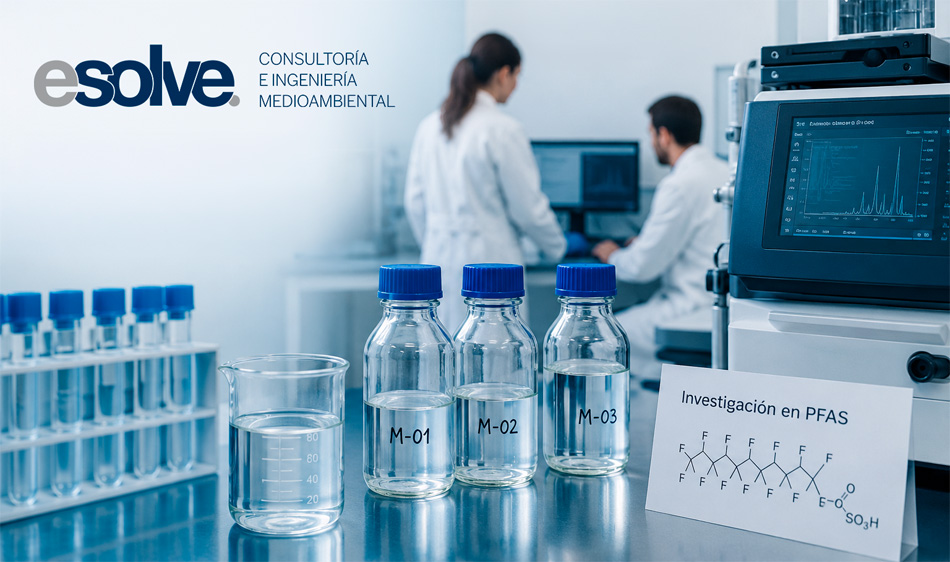
In addition, we continue to promote environmental R+D+i projects focused on the research and treatment of emerging contaminants such as PFAS and APIs, one of the great current environmental challenges for industry and water management.

Our approach combines sustainability, innovation and scientific rigour to help companies and industries reduce their environmental impact and move towards more responsible, efficient and resilient models.


Safety, occupational health and preventive culture

The update of our Corporate Responsibility also puts the focus on people and the preventive culture that we promote within the organization.

Especially in field projects and complex environmental actions, we consider it a priority to ensure safe, healthy and technically controlled working environments, in line with the standards of ISO 45001 and our philosophy of continuous improvement.

Prevention, continuous training and the well-being of teams are part of the way we understand environmental engineering and corporate responsibility.


ESOLVE: a company committed to the environment and continuous improvement

At ESOLVE we believe that protecting land and water requires real commitment, technical knowledge and the ability to constantly evolve.

That is why we continue to evolve our management systems, procedures and corporate policies to offer effective, sustainable environmental solutions aligned with the current challenges of the industry and the environment.

This update of our Corporate Responsibility policy reinforces our vision of the future as a company committed to the environment, sustainability, safety and continuous improvement.

You can consult our updated policy here: ESOLVE Corporate Responsibility

Are you looking for an environmental engineering company committed to sustainability and continuous improvement?

At ESOLVE we help industries and organizations to face complex environmental challenges through sustainable, safe technical solutions adapted to each project.


Contact our team to find out more.

ESOLVE addresses the challenge of PFAS in the WaterTalks: how to respond to the new “nanogram era”

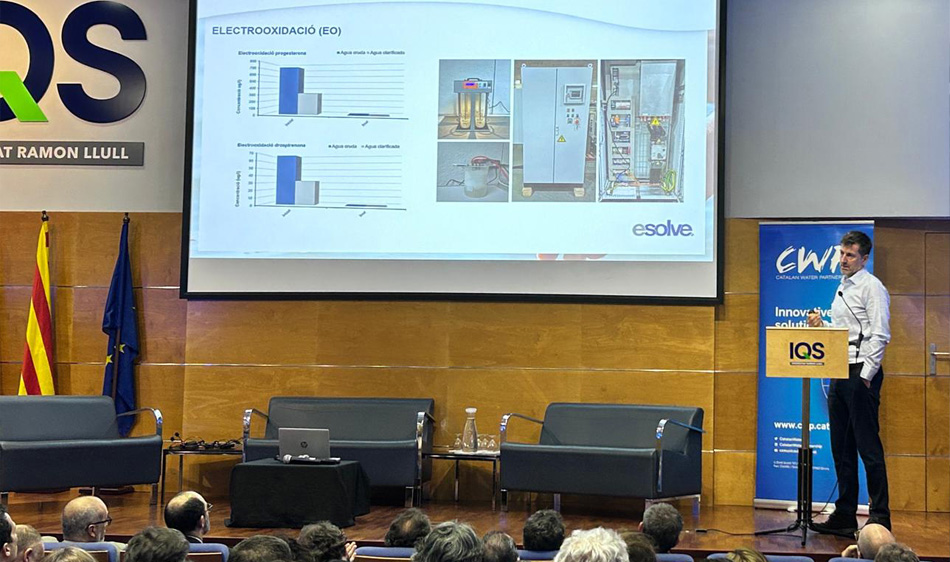
On 14th May, Ricard Mora, Managing Director of ESOLVE, participated as a speaker in the WaterTalks organised by the Catalan Water Partnership (CWP), Eurecat, ICRA and IQS, a conference focused on one of the great challenges that is already impacting European industry: the management of PFAS and other emerging pollutants.

Under the title “The challenge of PFAS: from the regulatory threat to the definitive solution”, the presentation addressed how the new European regulatory framework is forcing many organizations to rethink the management of their waters, aquifers and environmental assets.

A paradigm shift that ESOLVE defines as “the nanogram era”: a scenario where regulatory limits drop to extremely low concentrations and where many current infrastructures were not designed to respond to these levels of demand.


New PFAS regulation forces anticipation

PFAS (per-and polyfluoroalkyl compounds), known as “permaylated pollutants” due to their high persistence in the environment, have become one of the main regulatory priorities of the European Union.

Currently, Royal Decree 3/2023 already sets specific limits for PFAS in water for human consumption, while the new European directives for surface and groundwater pose even more restrictive requirements, placing certain priority compounds at levels in the order of nanograms per liter.

This new scenario poses a technical, economic and operational challenge for numerous industrial sectors, especially those with a possible impact on process water, aquifers or soils.

For many organizations, the issue is no longer just to comply with current regulations, but to anticipate future regulatory restrictions that could affect:

  • operational continuity,
  • the management of environmental assets,
  • administrative authorisations,
  • future remediation and treatment costs.


ESOLVE’s own technology to act directly on the source of contamination

Faced with this scenario, its comprehensive approach to the management and elimination of PFAS, based on technologies capable of not only separating the contaminant, but also destroying it effectively, was presented at the WaterTalks.

One of the central points of the presentation was the presentation of ESOLVE’s own plug-and-play electrooxidation plant , a mobile solution designed to work directly on site and adapt to different industrial and environmental environments.

The technology makes it possible to intervene directly on the source of contamination without the need for large permanent infrastructures, reducing implementation times, operational complexity and costs associated with treatment.

In addition, electrooxidation allows the chemical bonds of PFAS/APIS to be destroyed and the problem avoids transferring the problem to other media or to future waste management costs and environmental liabilities.

The plant is part of the comprehensive treatment train, which combines:

  • separative and concentrative technologies,
  • Surfactant Foam Fractionation (SAFF)
  • anion exchange resins (AEX),
  • Advanced destructive technologies based on electrooxidation.

This model allows each solution to be adapted to the specific characteristics of the site and the type of contamination present.


Solutions applicable in a real environment for a challenge that is no longer future

ESOLVE’s participation in the WaterTalks reinforces the company’s position as an engineering company specialising in emerging pollutants and in the development of technological solutions applicable in real industrial environments.

In a context where regulation evolves faster than many existing infrastructures, the ability to act in an agile, flexible and direct way on the ground will be key to reducing regulatory, operational and economic risks.

Adapting to the new PFAS regulation is no longer a future issue. For many industries, anticipating now will make the difference between managing risk in a controlled way or facing much more complex and costly adaptation processes in the coming years.

Are you concerned about the impact of the new PFAS regulation on your assets, process water, or industrial sites?

At ESOLVE we help organisations assess their vulnerability to emerging contaminants through specialised diagnostics and treatment strategies adapted to each industrial reality.


Contact our technical team to analyse your scenario and define a tailor-made action plan.

ESOLVE promotes research into PFAS in contaminated water in collaboration with the CSIC

The collaboration with the Spanish National Research Council (CSIC) reinforces ESOLVE’s commitment to the analysis and search for solutions to PFAS, one of the greatest challenges in groundwater pollution.

PFAS (per-and polyfluoroalkyl substances), known as “Eternal pollutants”, represent today one of the most complex challenges in environmental management. Its high persistence, its capacity for mobility in the environment and its resistance to degradation mean that its presence in groundwater requires a Technical Approach and a clear commitment to research.

In this context, ESOLVE has initiated a collaboration with the Spanish National Research Council (CSIC), through the Institute of Microelectronics of Barcelona (IMB-CNM) y, specifically, by the researcher Borja Sepúlveda in the Micro and Nanotools Group (MNTL), with the aim of continuing to deepen the analysis of water contaminated with PFAS and advance in the knowledge of its behavior in real conditions.

Applied research to address emerging contaminants

The collaboration is based on the study of groundwater samples managed by ESOLVE within the framework of its projects. This joint work makes it possible to connect the Field Experience with scientific knowledge, a key step to better understand the presence and evolution of PFAS in complex environments.

This type of initiative responds to a growing need in the sector: to integrate applied research into the Soil and water pollution management. It is not just a matter of identifying the problem, but of continuing to generate knowledge that allows it to be addressed more effectively.

Collaboration with reference centres

Working with institutions such as the CSIC is part of ESOLVE’s strategy to promote solutions based on science and evidence. Collaboration with research centres makes it possible to advance in the analysis of emerging pollutants and to strengthen the technical quality of the projects.

At the same time, such partnerships contribute to accelerating the development of new approaches in the PFAS Treatment, an area that is constantly evolving due to the complexity of these compounds.

An ongoing commitment to environmental innovation

This collaboration is part of ESOLVE’s commitment to innovate in soil and water decontamination. In the face of persistent pollutants such as PFAS, the answer necessarily involves continuing research, contrasting approaches and working in coordination with the scientific environment.

Because pollution management is not static. It evolves at the pace of knowledge.

And this is precisely where the collaboration between engineering and science makes the difference.

Learn more about the emerging contaminants and the impact of PFAS on water and soil here.

Black water and grey water: Environmental differences, risks and solutions

On a daily basis, our activity generates a large amount of waste, among which waste water occupies a critical place due to its volume and complexity. However, not all waste water is the same: its origin, whether domestic or industrial, and previous use determine its level of pollutant load and the specific treatment required to neutralize its impact.

At ESOLVE, we understand that the management of these effluents is a fundamental pillar of the protection of the subsoil. In this article, we look at the difference between black and grey water, the risks of poor management, and how advanced monitoring is the key to a sustainable future.


What differentiates black water from grey water?

Within the domestic sphere/daily use, it is vital to classify water according to its origin in order to apply the appropriate technical solution:

  • Black water: It comes mainly from toilets and contains a high load of organic matter (faeces and urine). They are the main source of microorganisms and pollutants.
  • Grey water: Its generated in showers, sinks or sinks that do not contain faecal bacteria. They are usually soapy waters that can carry grease, suspended solids and emerging contaminants such as microplastics.

On a technical level, the main distinction lies in the pollutant load: black waters has a significantly higher potential for environmental impact, requiring more complex purification processes.

For their part, the volume and lower pollutant load of grey water make them ideal candidates for the circular economy. In this sense, the new Royal Decree 1085/2024 on water reuse establishes an updated framework to promote the use of reclaimed water, promoting more efficient management of available water resources.


Environmental impact: The risks of poor management

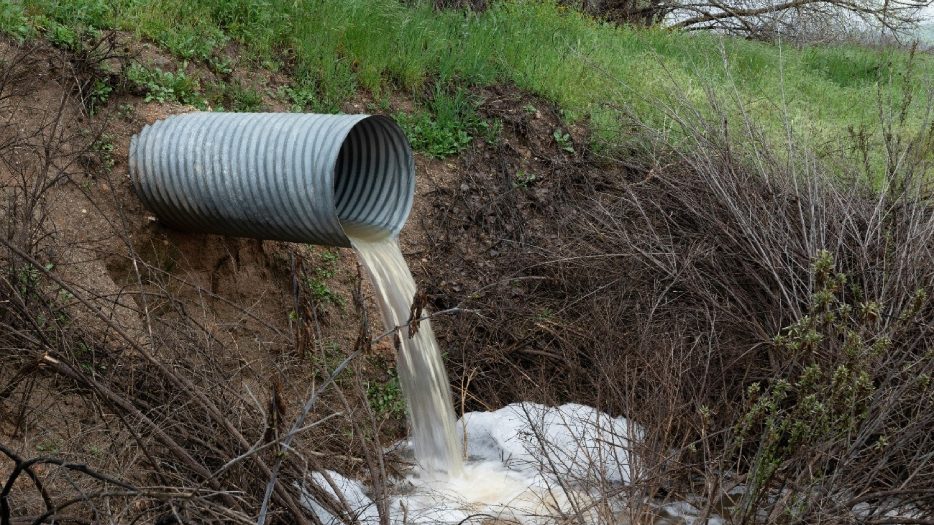
Undetected filtration or poor management of these effluents can lead to critical scenarios for the environment:


Infiltration into soils and aquifers

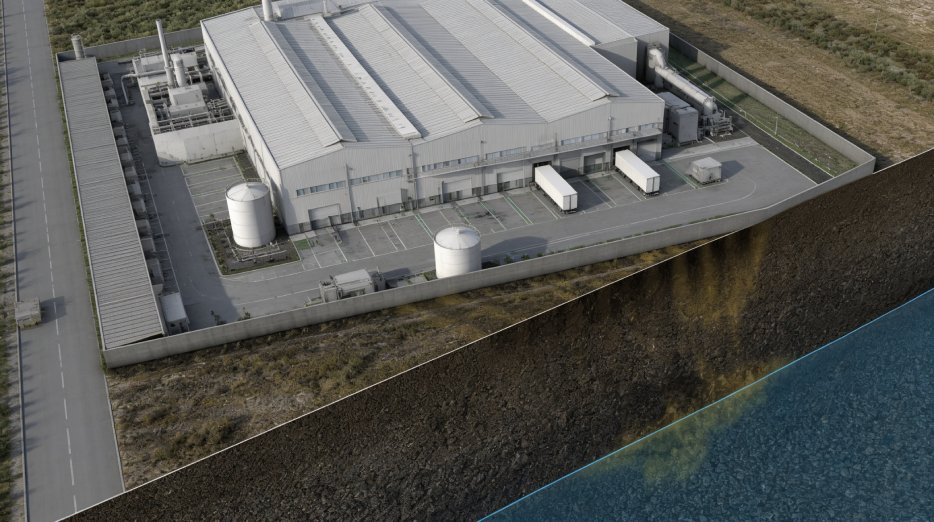
Black waters filtration severely degrades the chemical composition of the soil. In permeable soils, the risk increases: Black waters can reach underground aquifers, compromising the quality of drinking water sources. For this reason, at ESOLVE we prioritise subsoil protection and characterisation treatments, following the damage assessment criteria established in Royal Decree 665/2023


Health and biodiversity risks

  • Pathogens: Untreated water spreads infectious diseases through bacteria and viruses.
  • Ecosystems: Uncontrolled dumping can catastrophically alter habitats, disrupting the balance necessary for the survival of animal and plant species.
  • Emissions: The decomposition of organic matter in sewage generates greenhouse gases and harmful gases such as methane, hydrogen sulfide, and carbon dioxide.


Diffuse pollution: The challenge of maintenance

One of the biggest challenges for companies and municipalities is diffuse or non-point pollution. Often, old septic systems or sewer systems that are not properly maintained have leaks that are difficult to locate. Although they are difficult to detect with the naked eye, their impact due to accumulation can be devastating to the environment. For this reason, administrations reinforce control over these deficiencies through technical frameworks such as the MITECO Discharge Legislation, which seeks to regulate overflows in sanitation systems to minimise accidental pollution.


ESOLVE: Experts in environmental solutions and monitoring

Wastewater management has ceased to be a purely domestic affair and has become a large-scale environmental challenge that requires technical rigor. The correct management of effluents, both industrial and domestic, is a shared responsibility that involves us all. At ESOLVE, we contribute our experience to transform this challenge into a guarantee of security:

  • Advanced monitoring : We implement control systems to detect leaks and prevent impacts before they become irreversible.
  • Soil diagnosis: We analyze the possible impact on aquifers and soils due to accidental discharges or deficient systems.
  • Prevention and Sustainability: We help organizations comply with regulations, ensuring the health of ecosystems for future generations.


Do you need to ensure the environmental integrity of your facilities? At ESOLVE we help you monitor, solve and prevent any problem arising from wastewater management.

Contact our technical team at esolve.es

ESOLVE brings technical criteria and strategic vision to the Conference on soil contamination of the Waste Agency of Catalonia.

On 18 and 19 February, ESOLVE actively participated in the Conference on Soil Pollution organised by the Waste Agency of Catalonia (ARC), one of the main spaces for technical and regulatory debate in the field of soil quality in Catalonia.

ESOLVE’s contribution was articulated in three relevant interventions. On the one hand, during the session dedicated to sustainability, ESOLVE addressed the ZLD as a strategy aimed at minimizing liquid discharge and optimizing the use of water resources, in a context marked by water scarcity and increased regulatory requirements. The approach emphasized the need to integrate advanced technology with technical criteria to ensure viable and efficient solutions.

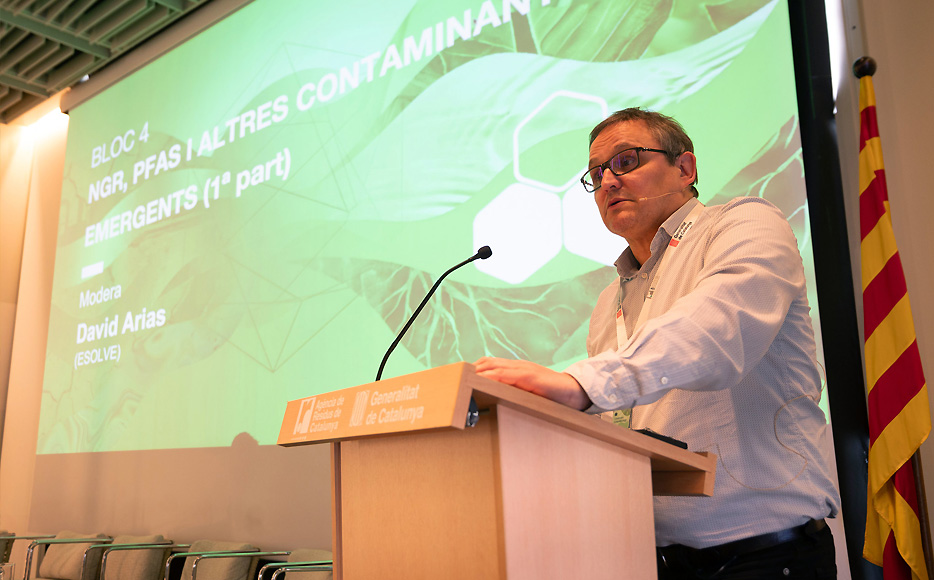
On the other hand, the company’s technical manager, David Arias, moderated block 4 dedicated to emerging pollutants, an area that currently concentrates an important part of the technical and regulatory challenges of the sector. The moderation allowed for an orderly discussion, provided technical context and facilitated reflection on the new evaluation criteria and the challenges associated with highly complex substances.

The following day, ESOLVE intervened as a speaker in the same block to present its experience in the remediation of PFAS, persistent pollutants of special environmental and regulatory concern. The company has been working for years on projects related to the research and treatment of these compounds, developing solutions based on rigorous risk analysis and the application of technologies adapted to each site.

The presentation highlighted the need to address PFAS with a specialized technical vision and anticipation in the face of an evolving regulatory framework. The experience accumulated by ESOLVE in this field reinforces its position as a consultancy prepared to face one of the great environmental challenges of the coming years.

Participation in these conferences is not only an institutional presence, but also a clear desire to actively contribute to the evolution of the sector. In a context marked by the updating of criteria such as the new NGRs and by the increase in environmental demand, the ability to provide technical criteria, applied knowledge and strategic vision becomes differential.

This line of action is aligned with the three pillars that define ESOLVE’s activity: science, innovation and sustainability. Science as a basis for sound diagnoses and informed decisions; innovation as a driving force to incorporate advanced methodologies and technologies; and sustainability as a commitment to the protection of soil and water in the long term.

With its participation in the ARC Conference, ESOLVE consolidates its position as a strategic technical agent in the field of soil and water decontamination, capable not only of executing projects, but also of anticipating scenarios and contributing to defining the standards of the sector.

ESOLVE joins the Catalan Water Partnership to promote innovation and sustainability in water management

ESOLVE | Environmental Consulting and Engineering has formalised its incorporation into the Catalan Water Partnership (CWP), the cluster that brings together leading companies and institutions in innovation and sustainability in the water sector. This strategic alliance allows ESOLVE to strengthen its mission to protect natural resources and consolidate its leadership in comprehensive solutions for soil and water decontamination.

Leadership and experience at the service of innovation

For Ricard Mora, Managing Director of ESOLVE, “being part of the Catalan Water Partnership is a key opportunity to share knowledge and establish synergies with the most relevant players in the sector. Innovation in water purification and treatment of emerging pollutants is not only a technological challenge, but a way to generate a real and measurable environmental impact”.

ESOLVE’s expertise in advanced water treatments, including remediation of emerging pollutants, innovative purification systems, and sustainable solutions based on scientific evidence, brings differential value to CWP. This collaboration reinforces the company’s capacity to develop R+D+i projects that combine technical efficiency, sustainability and social impact.

Synergies and collaborative projects

Joining CWP opens the door to new collaborative initiatives with companies, universities and research centres, promoting sustainable water management and the optimisation of industrial and municipal processes. It also allows ESOLVE to participate in projects aimed at innovation in advanced water treatments, reinforcing its commitment to comprehensive and environmentally responsible solutions.

Commitment to the future of the sector

With this alliance, ESOLVE consolidates its position as a benchmark in the soil and water decontamination sector, positioning itself as an active agent in the sustainable transformation of the water sector in Catalonia and Spain. The company reaffirms its commitment to innovation, technology and sustainability, combining technical rigour and real impact on the territory.

Recovering territories: a long-term environmental, social and economic investment

The recovery of polluted soil and water has become one of the great environmental and territorial challenges of the coming decades. Former industrial areas, closed landfills or spaces degraded by past activities today represent not only an environmental liability, but also a strategic opportunity for sustainable development.

It must be considered that these urban areas where land is very valuable to house new facilities such as schools, hospitals, parks and areas with common spaces, housing… the well-being of the people must be ensured and this involves regenerating the subsoil.

Far from being a one-off action, environmental remediation is a complex technical process that combines diagnosis, intervention and long-term monitoring. Its objective is not only to eliminate pollutants, but also to ensure that the territory can recover safe uses that are compatible with its environment and its community.

Polluted soil limits the urban, economic and social development of a territory. Their recovery makes it possible to unlock spaces that would otherwise remain unused for decades. Disused industrial areas can be transformed into productive areas, natural spaces or green infrastructures that add real value to the territory.

In addition, these processes reduce risks to human health, improve environmental quality and contribute to more efficient territorial planning, aligned with the objectives of sustainability and circular economy.

Decontamination has a direct effect on ecosystems. Improving soil and water quality promotes the recovery of basic ecological functions and allows biodiversity to be progressively re-established. This process, based on scientific and technical criteria, is key to restoring environmental balances that have been altered for years.

Environmental monitoring after remediation is essential to ensure the stability of results and the safety of new land uses.

Each recovery project is unique and must be approached with an in-depth knowledge of the site, its history and its context. The characterization of the terrain, the selection of appropriate technologies and the management of the associated risks are critical phases to ensure the success of the action.

We can find old industrial areas that present problems of bad smells and leaks of contaminated water as a result of poor soil recovery. Or expanding companies that want to grow responsibly and assume the environmental liabilities of the past so that they understand that they have to generate wealth in healthy environments.

Polluted soil affects the water cycle Portability is threatened by the presence of contaminants in the water and subsoil.

That is why at ESOLVE we approach environmental recovery from a comprehensive perspective, combining engineering, consulting and environmental monitoring to offer solutions adapted to each case. Our goal is to turn degraded spaces into functional, safe territories with a future.

The recovery of soil and water is not only a response to a problem of the past, but a key tool for building more resilient, sustainable territories prepared for the environmental challenges of the present and the future.

Regenerating today to protect our tomorrow: environmental balance for 2025 and keys to 2026

Talking about sustainability is no longer a trend. It is a necessity. And 2025 has been a year that has made this clear on many fronts: regulatory, technical, social and, above all, operational.

Soil and water management has gone from being a secondary issue to occupying a central place in the strategic decisions of companies and administrations. Not because of fashion, but because environmental, economic and reputational risks are more evident today than ever.

At ESOLVE we have accompanied this change from within, working on the ground and actively participating in projects where regeneration was not an option, but a responsibility.

2025: A turning point for environmental management

During this year, dynamics that were already pointed out in previous years have been consolidated, but in 2025 they have gained real weight:

  • Water protection has become a cross-cutting priority, driven by episodes of water stress and increased regulatory demands.
  • The recovery of contaminated soils has acquired a new strategic value, especially in former industrial enclaves destined to be transformed.
  • Technology applied to environmental characterization has made it possible to make more precise and better-informed decisions.
  • And, increasingly, organizations have understood that acting preventively reduces risks and generates long-term value.

This context has changed the way environmental projects are approached: it is no longer just a matter of complying, but of doing it well.

From data to decision: the value of rigorous characterization

One of the great lessons learned from 2025 has been to confirm something essential: the quality of the diagnosis conditions the entire subsequent process.

Investing in a comprehensive characterization of soil and water allows:

  • Define more effective remediation strategies.
  • Reduce technical and regulatory uncertainties.
  • Optimize time and costs.
  • And minimize impacts on existing activity.

Applied science, when integrated from the beginning of the project, ceases to be a technical requirement to become a strategic tool.

Innovation that translates into real solutions

Environmental innovation has demonstrated its true usefulness this year when it has been able to materialize in concrete solutions:

  • Less invasive remediation technologies, supporting operational continuity.
  • Predictive models and analytics tools that improve decision-making.
  • R+D projects focused on more sustainable solutions from an energy and environmental point of view.

In this context, innovation does not mean experimenting aimlessly, but rather applying knowledge with criteria and responsibility.

Regeneration is also a social commitment

Beyond the technical, 2025 has reinforced a key idea: environmental regeneration has a direct impact on people.

Every reclaimed soil and protected body of water contributes to:

  • Safer and healthier environments.
  • New opportunities for land use.
  • Greater trust between companies, administrations and citizens.

Remediation is no longer an invisible process but an action with a real impact on the environment and the community.

2026: growing demand and new opportunities

Next year will come with clear challenges: more regulatory pressure, new pollutants to control and a growing demand for well-founded environmental solutions. But it will also open up opportunities for those who are prepared.

Everything points to the fact that in 2026 we will see:

  • Greater integration of science in decision-making.
  • Companies that are more proactive and demanding of their technical partners.
  • An increasingly important role of remediation in the transition to more sustainable production models.

At ESOLVE we face this scenario with a clear conviction: the combination of technical rigour, innovation and purpose is the basis for moving forward.

Looking forward with responsibility

Regenerating soil and protecting water is not only about solving an environmental problem. It is taking care of the future, anticipating risks and assuming a real commitment to the territory.

At ESOLVE we will continue to work to provide solutions based on science, knowledge and experience, accompanying companies and administrations in projects that require precision, vision and responsibility.

Because protecting what belongs to everyone cannot wait.

ESOLVE | We look after tomorrow, regenerating polluted environments.

ESOLVE reinforces its commitment to safety and the environment with ISO 45001:2018 certification

At ESOLVE we have obtained ISO 45001 certification, a new step in our commitment to continuous improvement, occupational safety and excellence in environmental management.

This international certification certifies that our occupational health and safety management system complies with the most demanding standards in occupational risk prevention, worker protection and operational control in complex industrial and technical environments.

Obtaining ISO 45001 is in addition to the ISO 14001 certification, already implemented in ESOLVE, reinforcing a work model where safety, sustainability and technical rigour advance together.


An environmental consultancy and engineering committed to people and the environment

At ESOLVE we work on environmental consulting and engineering projects specialized in:

  • Decontamination of contaminated soils.
  • Environmental research and risk analysis.
  • Environmental remediation in industrial environments.
  • Industrial water treatment.
  • Comprehensive management of the water cycle.
  • Characterization of emerging contaminants such as PFAS and APIs.
  • Environmental management for chemical, pharmaceutical and manufacturing industries.

Many of these projects involve field work, coordination of business activities (CAE, according to Spanish occupational health and safety regulations), operations in active industrial facilities and technical actions with high preventive demand.

Therefore, integrating occupational health and safety into all our processes is not only a regulatory requirement: it is an essential part of our corporate culture.


ISO 45001 and ISO 14001: Integrated safety and sustainability

The combination of ISO 45001 and ISO 14001 certifications allows us to consolidate an integrated management system aimed at:

  • The active prevention of occupational risks.
  • The protection of the health and well-being of the team.
  • Minimization of environmental impact.
  • Continuous improvement of internal processes.
  • Responsible management of environmental projects.
  • Operational optimization in industrial environments.
  • Environmental and safety compliance.

In sectors such as environmental decontamination and industrial water treatment, the safety of people and the protection of the environment must be addressed together.

That is why at ESOLVE we understand that regenerating polluted environments also involves creating safe, planned and responsible work environments.


Occupational safety in environmental and industrial projects

The ISO 45001 certification reinforces our ability to manage complex environmental projects under risk prevention, coordination and control criteria.

This includes key aspects such as:

  • Evaluation and control of occupational risks.
  • Safety protocols in field work.
  • Coordination of business activities.
  • Training and preventive awareness.
  • Continuous improvement of health and safety performance.
  • Integration of prevention into technical decision-making.

For ESOLVE, occupational safety is not an isolated element within the organization, but a transversal part of the environmental management and technical quality of our projects.


A certified environmental company oriented towards continuous improvement

Obtaining ISO 45001 reflects ESOLVE’s commitment to sustainable, responsible growth aligned with the current needs of the industry and the environment.

We continue working to consolidate ourselves as a benchmark environmental consulting and engineering company in:

  • Decontamination of soil and water.
  • Industrial water treatment.
  • Industrial environmental management.
  • Emerging contaminants such as PFAS and APIs.
  • Occupational health and safety in environmental projects.
  • Sustainable solutions based on science and innovation.

Because we believe that environmental innovation only makes sense when it is developed with technical rigour, responsibility and care for people and the environment.

Find out how we work on safety and sustainability in industrial environmental projects.