

21 Apr Black water and grey water: Environmental differences, risks and solutions
Black water and grey water: Environmental differences, risks and solutions
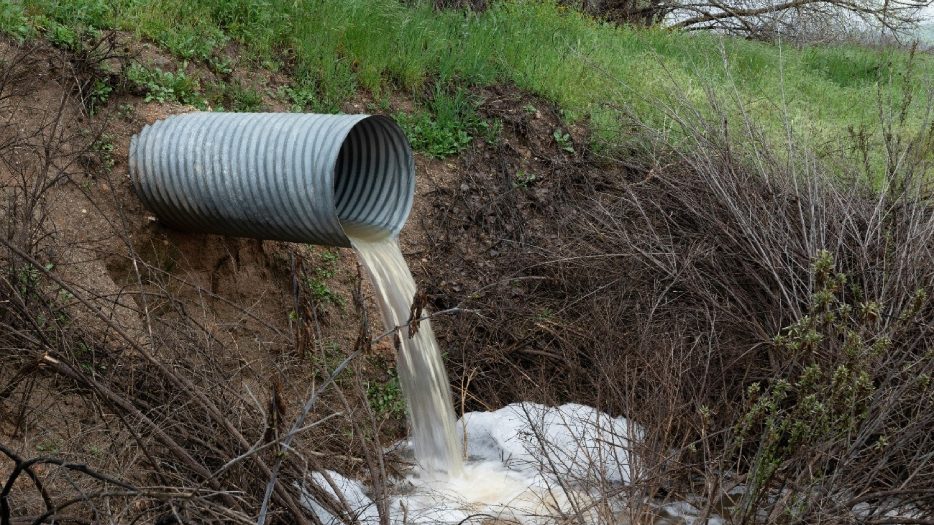
On a daily basis, our activity generates a large amount of waste, among which waste water occupies a critical place due to its volume and complexity. However, not all waste water is the same: its origin, whether domestic or industrial, and previous use determine its level of pollutant load and the specific treatment required to neutralize its impact.
At ESOLVE, we understand that the management of these effluents is a fundamental pillar of the protection of the subsoil. In this article, we look at the difference between black and grey water, the risks of poor management, and how advanced monitoring is the key to a sustainable future.
What differentiates black water from grey water?
Within the domestic sphere/daily use, it is vital to classify water according to its origin in order to apply the appropriate technical solution:
- Black water: It comes mainly from toilets and contains a high load of organic matter (faeces and urine). They are the main source of microorganisms and pollutants.
- Grey water: Its generated in showers, sinks or sinks that do not contain faecal bacteria. They are usually soapy waters that can carry grease, suspended solids and emerging contaminants such as microplastics.
On a technical level, the main distinction lies in the pollutant load: black waters has a significantly higher potential for environmental impact, requiring more complex purification processes.
For their part, the volume and lower pollutant load of grey water make them ideal candidates for the circular economy. In this sense, the new Royal Decree 1085/2024 on water reuse establishes an updated framework to promote the use of reclaimed water, promoting more efficient management of available water resources.
Environmental impact: The risks of poor management
Undetected filtration or poor management of these effluents can lead to critical scenarios for the environment:
Infiltration into soils and aquifers
Black waters filtration severely degrades the chemical composition of the soil. In permeable soils, the risk increases: Black waters can reach underground aquifers, compromising the quality of drinking water sources. For this reason, at ESOLVE we prioritise subsoil protection and characterisation treatments, following the damage assessment criteria established in Royal Decree 665/2023
Health and biodiversity risks
- Pathogens: Untreated water spreads infectious diseases through bacteria and viruses.
- Ecosystems: Uncontrolled dumping can catastrophically alter habitats, disrupting the balance necessary for the survival of animal and plant species.
- Emissions: The decomposition of organic matter in sewage generates greenhouse gases and harmful gases such as methane, hydrogen sulfide, and carbon dioxide.
Diffuse pollution: The challenge of maintenance
One of the biggest challenges for companies and municipalities is diffuse or non-point pollution. Often, old septic systems or sewer systems that are not properly maintained have leaks that are difficult to locate. Although they are difficult to detect with the naked eye, their impact due to accumulation can be devastating to the environment. For this reason, administrations reinforce control over these deficiencies through technical frameworks such as the MITECO Discharge Legislation, which seeks to regulate overflows in sanitation systems to minimise accidental pollution.
ESOLVE: Experts in environmental solutions and monitoring
Wastewater management has ceased to be a purely domestic affair and has become a large-scale environmental challenge that requires technical rigor. The correct management of effluents, both industrial and domestic, is a shared responsibility that involves us all. At ESOLVE, we contribute our experience to transform this challenge into a guarantee of security:
- Advanced monitoring : We implement control systems to detect leaks and prevent impacts before they become irreversible.
- Soil diagnosis: We analyze the possible impact on aquifers and soils due to accidental discharges or deficient systems.
- Prevention and Sustainability: We help organizations comply with regulations, ensuring the health of ecosystems for future generations.
Do you need to ensure the environmental integrity of your facilities? At ESOLVE we help you monitor, solve and prevent any problem arising from wastewater management.

Sorry, the comment form is closed at this time.