02 Oct What are PFAS and why are they an environmental challenge?
What are PFAS and why are they an environmental challenge?
PFAS have become a health and environmental concern in recent years. They are a very large group of chemicals that have been used for decades for their properties and are now beginning to pose important questions for many industries.
Where are they? Can they be present in our processes? Can they reach the water or the soil? How are they detected? And, if they appear, can they be eliminated?
It is not always easy to answer these questions. PFAS form a very large family of compounds, with different behaviors, and their high persistence makes their management a challenge for both the industry and those of us who work in environmental protection.
Therefore, knowing them is the first step.
What are PFAS?
PFAS is the name given to a large family of per-and polyfluoroalkyl substances. They are synthetic chemical compounds that have been used for decades in numerous industrial applications and consumer products.
They all have one thing in common: they contain bonds between carbon and fluorine atoms. These bonds are among the strongest in organic chemistry and are precisely what give PFAS some of their most useful properties: resistance to heat, water, grease or degradation.
The problem is that the same stability that is so useful in a product can become a problem when these substances reach the environment.
Some PFAS can remain for long periods of time without degrading easily. Hence, terms such as “eternal chemicals” or “forever chemicals have become popular”. The European Chemicals Agency (ECHA) considers PFAS a family of substances with a high persistence and proposes measures to reduce their emissions into the environment.
And here the challenge begins: we are not talking about a single substance, but a very broad family of compounds, with different characteristics and behaviours.
In what products and activities can we find PFAS?
Although in recent years we have heard about PFAS mainly because of their presence in consumer products, their use is also related to numerous industrial activities.
We can find them, among other applications, in:
- Non-stick coatings and utensils.
- Waterproof and stain-resistant fabrics.
- Certain cosmetics and personal care products.
- Paints, coatings and other industrial products.
- Foams used in firefighting.
- Industrial processes where water, heat or grease resistance properties are required.
The EFSA, the European Food Safety Authority, includes, among others, applications in non-stick utensils, food packaging, water-repellent garments and firefighting foams. It also points out that PFAS can be released into the environment from manufacturing facilities, landfills or wastewater treatment plants.
This is important because a company does not have to be directly using a substance identified as PFAS for there to be a possibility of presence in any of its streams.
It can be related to a raw material, an auxiliary product, a coating, a process or even to activities that are not directly part of production.
Therefore, when we talk about PFAS in the industry, the first question should not only be, do we have PFAS, but also, where could they be and how could they get to the environment?
Why are PFAS of concern? What impact do they have on health?
The concern about PFAS has two aspects: health and environmental.
Not all PFAS exhibit the same behavior or risk profile. Some of the most studied substances, such as PFOA or PFOS, have been the subject of numerous investigations and evaluations by scientific and regulatory bodies.
The available evidence suggests that exposure to certain PFAS may be associated with different health effects. EFSA considers the decreased immune system response to vaccination as the critical effect used in its assessment of PFOA, PFOS, PFNA and PFHxS. Other effects have also been studied, such as increased cholesterol levels and the related consequences of this.
But there is still much to know. The enormous number of compounds that make up this family means that we do not have the same level of information for all of them, and we do not fully know what can happen when there is simultaneous exposure to different PFAS.
This does not mean that we should wait until we have all the answers to act. It is precisely the persistence of these substances that makes prevention and control particularly important.
What impact do PFAS have on the environment?
This is where PFAS pose an especially complex problem.
Unlike other contaminants that can degrade relatively easily, certain PFAS can remain in the medium for a long time. In addition, some have high mobility and can move through water and soil.
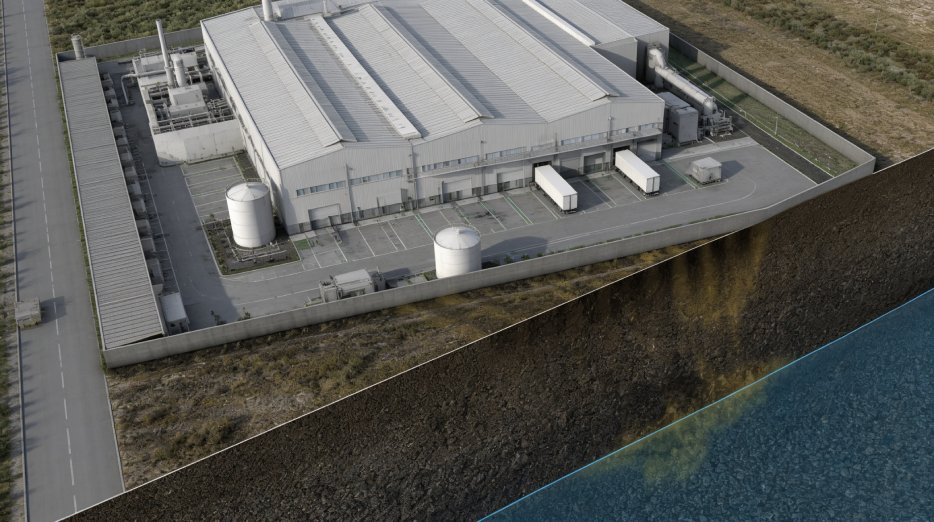
This means that pollution that originates in a specific point can end up affecting other media.
For example, a PFAS present in wastewater can reach a treatment plant. A substance that is not properly retained can continue its journey. Similarly, a release to the soil can end up affecting groundwater.
And here comes an added difficulty: PFAS can be found in very low concentrations. Detecting them requires proper analytical methods and, above all, knowing what you are looking for.
That’s why characterization is so important. Before we think about how to remove a contamination, we need to understand it.
How can PFAS get into water?
The entry routes can be very different and depend on each activity.
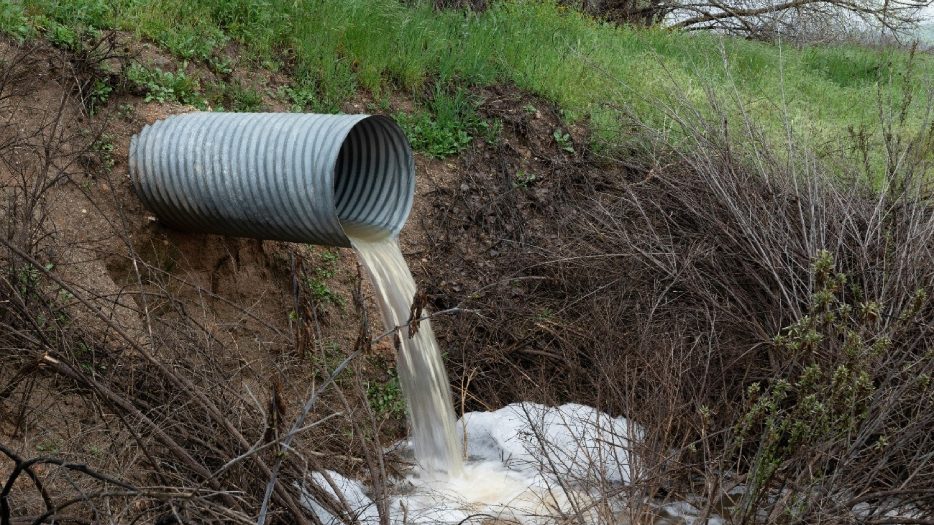
In an industry they can be related to raw materials or products used during the process. They can also appear in wastewater, process water or streams generated during certain operations.
In other cases, the origin may be in previous activities, in firefighting facilities or in a historical contamination of the soil that has ended up affecting groundwater.
This means that finding PFAS in water does not always allow its origin to be immediately identified.
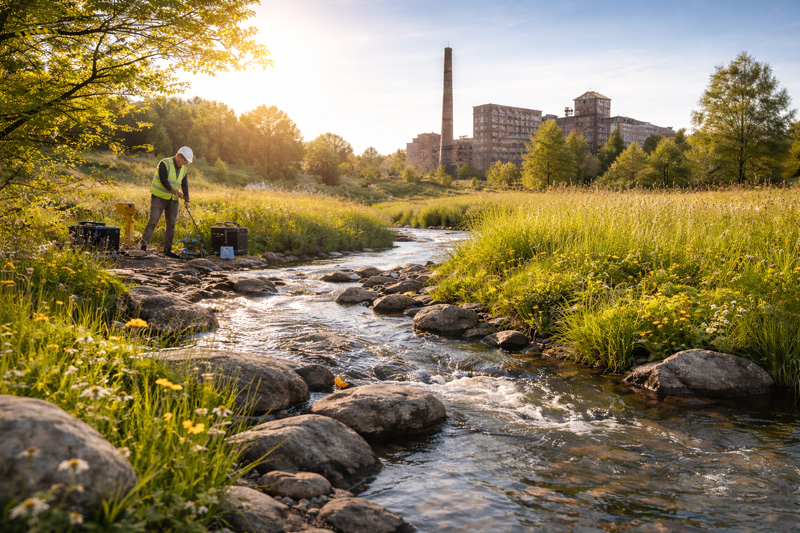
The route must be reconstructed: to know the activity, to review the materials and processes used, to analyse the water and, when necessary, also to study the soil and subsoil.
It’s not just about finding a PFAS. It’s about understanding where it’s coming from, where it can go, and what can happen if it stays in the middle.
For ESOLVE, this approach is part of a broader vision of environmental management: to act on the problem from its source and not only when the pollution has already reached the environment. It is also the approach we apply in our subsoil engineering and environmental work.
Why are PFAS so difficult to remove?
PFAS present a particular challenge for water treatment due to the high stability of their chemical bonds.
But there’s another difficulty that’s sometimes overlooked: Not all PFAS are created equal.
Its structure, chain length, concentration and behaviour in water can be different. In addition, the characteristics of the water itself. Its composition, organic matter, salts and other emerging contaminants. All can influence the operation of a treatment.
That is why there is no single technology that is the best solution for all cases.
Technologies that can be used to remove PFAS from water include granular activated carbon, ion exchange resins, and different membrane processes. These are solutions that can be very useful, but you need to consider what happens to PFAS once removed from water: they can be concentrated in another stream or waste that will need to be managed.
And this difference is important.
Removing a PFAS from water does not always mean destroying it.
There are also technologies aimed at the destruction of these compounds, including certain advanced oxidation processes. Their application and efficiency will depend on the characteristics of each case.
At ESOLVE we work on the development and application of technologies to face challenges related to emerging contaminants such as PFAS. Our research and development (R+D+i) line combines advanced diagnostics, applied research and technological development.
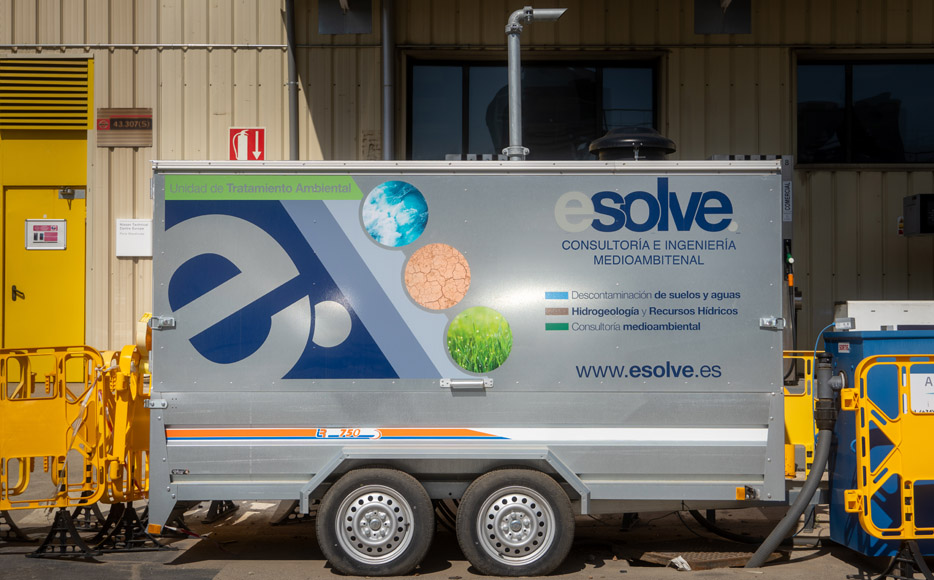
And we also have experience in real PFAS treatment projects. In the European LIFE-SOURCE project, for example, ESOLVE designed and built large-scale treatment equipment for the remediation of contaminated groundwater, combining different technologies such as anion exchange resins, active foam fractionation and electrochemical oxidation.
But even in these cases, technology is not the first step.
Before deciding how to treat contaminated water, it is necessary to know what PFAS are present, in what concentration and what the matrix we want to treat is like.
There is no one-size-fits-all solution. You have to understand the problem first.
What can an industry do in the face of the challenge of PFAS?
European regulation is moving towards greater control of these substances and more and more activities will have to pay attention to their possible presence.
In March 2026, ECHA’s scientific committees endorsed a proposal for a restriction at EU level, with certain exceptions and measures to minimise emissions. The regulatory process continues to move forward.
But waiting for a particular obligation to appear may not be the best strategy.
For a company, anticipating can mean reviewing where PFAS can be used, identifying potential routes of entry into water, knowing what substances may be present in its processes, and establishing controls to detect a problem before it becomes a major contamination.
And if PFAS are already present, the path starts somewhere else: characterizing the contamination.
What compounds are there?, In what concentrations?, Where are they?, How are they moving?, What risk is there?, What treatment can work in these conditions?
They are different questions, and answering them well is what allows good decisions to be made later.
In this sense, ESOLVE water treatment addresses the treatment of wastewater, groundwater and process water precisely taking into account the growing need to treat contaminants such as PFAS, drugs and other emerging contaminants.
The Future of Environmental Management of PFAS
PFAS management is entering a new phase.
For years, much of the effort has focused on identifying certain compounds and setting limits for their presence. But the enormous diversity of PFAS and their persistence make it increasingly clear that the problem cannot be tackled solely compound-by-compound when contamination is already present.
European regulation is driving this change. In addition to the general proposal to restrict PFAS, there are already specific restrictions for certain groups and uses. ECHA, for example, includes restrictions for certain PFAS substances and notes that the restriction of PFAS in firefighting foams will begin to apply in October 2026.
For the industry, this means that it will be increasingly important to know what substances are used, how they can reach the environment and what alternatives and solutions exist.
It also means that it will be necessary to bring together two pieces of knowledge that have long worked more separately: knowledge of the industrial process and environmental knowledge.
The industry knows its process. Environmental specialists can help understand what happens when substances leave that process and reach the water, soil or subsoil.
And that collaboration will become increasingly important.
In fact, at ESOLVE we are also working on this connection between scientific knowledge and practical application. In 2026 we have started a collaboration with the CSIC to deepen the analysis of water contaminated with PFAS and the knowledge of its behaviour in real conditions.
Because the solution doesn’t start when a PFAS shows up in a test.
Start earlier, understanding where it may be and how it can reach the environment. And when the problem already exists, start by characterizing it well so that you can decide how to act.
PFAS force us, in short, to change the way we look at environmental management a little.
It is not just a matter of complying with a limit or installing a treatment. It is about knowing the problem, preventing when we are still in time and finding the right solution when the contamination is already there.
And on that path, understanding what we have in front of us is always the first step.