

27 Oct Emerging contaminants: What are they, types, and how should they be treated?
Emerging contaminants: What are they, types, and how should they be treated?
What are emerging contaminants and what types are there? How do they get into the water? What technologies can be used to treat them? Learn about the main challenges of their management.
Emerging pollutants are not necessarily new pollutants. Many of them have been part of our daily and industrial activity for decades. What has changed in recent years is our ability to detect them, study their effects and understand how they can reach the environment.
Drugs, personal care products, PFAS, microplastics, certain pesticides and other substances can reach water through different routes and, in some cases, remain in them even after conventional purification processes.
This poses a growing challenge for water management. It is not only a matter of detecting which substances are present, but also of understanding where they come from, how they behave and what alternatives exist to reduce their presence.
What are emerging pollutants?
The term emerging pollutants is used to refer to substances whose presence in the environment has become increasingly important and which have not always been traditionally considered as polluting substances.
This is a very large and heterogeneous group. Some of these substances have been known for decades, but advances in analytical techniques have made it possible to detect them at increasingly lower concentrations and to study their behaviour in water, soils and ecosystems in greater detail.
In addition, the available knowledge is not the same for all pollutants. While some substances have been extensively studied and have specific control mechanisms, in others there are still uncertainties about their effects, their environmental behavior or their long-term presence.
Therefore, talking about emerging pollutants does not mean talking about a single family of substances or a single environmental problem.
How do emerging contaminants get into the water?
One of the main routes of entry is wastewater, both urban and industrial. Certain substances used in medicines, personal care products or industrial processes can be determined by being incorporated into wastewater streams and reaching treatment plants.
But treatment water is not the only way.
Depending on the substance and activity of origin, emerging contaminants can reach the environment through:
- Industrial processes.
- Use and disposal of medications.
- Personal care products and cosmetics.
- Agriculture and livestock.
- Use of pesticides.
- Landfills and leachate.
- Urban runoff.
- Activities related to certain facilities and materials.
In addition, a substance that initially reaches the water can eventually affect other media. For example, certain contaminants can move into groundwater or become trapped in sediments.
That’s why, when an emerging contaminant appears in a water, identifying it is only the first step. It is also necessary to understand where it comes from and what path it can follow in the environment.
What types of emerging contaminants are there?
The concept of emerging contaminants encompasses substances with very different properties, origins and behaviours. Some of the groups that are receiving the most attention are the following:
- Drugs and active ingredients
Medicines can reach the water mainly through human and animal excretion, but there may also be other routes related to their manufacture, use or disposal.
Among the substances of interest are different active pharmaceutical ingredients, some of which can exhibit biological activity even at very low concentrations.
Their presence in water poses a particular challenge because conventional treatments are not specifically designed to remove all of these compounds.
APIs (Active Pharmaceutical Ingredients) are particularly relevant in certain industrial processes and are an area of growing interest in water treatment.
- PFAS
Per- and polyfluoroalkyl substances (PFAS) are a very broad family of chemical compounds used for decades in different industrial extensions and consumer products.
Their high persistence and difficulty in treating them make them one of the groups of emerging pollutants currently receiving the most attention.
Not all PFAS exhibit exactly the same behavior, so their characterization is essential before considering a treatment.
Find out more about what PFAS are and why they pose an environmental challenge.
- Personal Care Products & Cosmetics
Hygiene and personal care products can contain substances that, after use, end up being incorporated into the water cycle.
Among them can be found different ingredients and compounds with very diverse physicochemical properties. Their continued presence in wastewater means that some of them are the subject of study monitoring.
- Microplastics and nanoplastics
Microplastics are small particles of plastic material that can come from the fragmentation of larger products as well as from other sources.
Nanoplastics have even smaller dimensions and can behave differently due to their size.
In addition to their own presence in the environment, the surfaces of these particles can interact with other substances present in the water. Therefore, their environmental behaviour is the subject of research and requires further characterisation.
- Pesticides and other products used in agriculture
Certain pesticides can reach surface and groundwater as a result of their use and processes such as runoff or infiltration.
Some of these substances have properties that may raise concerns about their possible effects on organisms and ecosystems, so their control is especially relevant in certain areas and activities.
- Other pollutants of industrial origin
There is also a wide group of substances used in industrial processes or present in certain products, such as some plasticizers, flame retardants or other chemical compounds.
Their behavior depends on their specific characteristics and the conditions in which they arrive in the environment.
This diversity is precisely one of the difficulties associated with emerging pollutants; there is no single behaviour or solution for them.
Why are emerging contaminants a concern?
The concern about emerging pollutants is due to different factors and cannot be explained solely by the concentration at which they appear.
In some cases they can be detected at very low concentrations, but that does not automatically mean that they are harmless. The potential impact depends, among other factors, on the characteristics of each substance, its persistence, mobility, toxicity, capacity for transformation and, where appropriate, its potential for bioaccumulation.
In addition, some pollutants can reach the environment continuously. This means that environmental exposure does not depend only on a specific episode, but also on the recurrent entry of certain substances.
Another important aspect is that there is still an uneven level of knowledge between the different pollutant groups. Some substances have been extensively studied, while for others it is still necessary to generate more information about their effects and environmental behavior.
Therefore, the identification and monitoring of these compounds are increasingly important for proper water management.
Do conventional purification systems remove emerging contaminants?
This is one of the most relevant questions when we talk about this type of contaminants. Conventional wastewater treatment systems are designed to reduce certain contaminants and quality parameters. However, their ability to remove certain emerging contaminants can be limited and highly variable depending on the substance and treatment conditions.
Not all contaminants behave in the same way: some can partially degrade during the process, others can remain in the water, while certain substances can concentrate in other streams, such as sludge.
Therefore, it is not correct to speak of a single “emerging contaminant removal rate”. Each compound and each water matrix requires a specific analysis.
And this is an especially important issue in industrial waters, where the composition of the effluent can be much more complex and variable.
How can emerging contaminants be treated?
There are different technologies for the treatment of emerging contaminants. These include:
- Activated carbon, used to adsorb certain compounds.
- Advanced oxidation processes, capable of transforming certain pollutants through chemical reactions with a high oxidizing capacity.
- Membrane processes, such as nanofiltration or reverse osmosis, which improve the removal of certain substances from water.
- Membrane bioreactors and other advanced biological processes, which can improve the removal of certain compounds.
- Ion exchange, especially relevant for certain pollutants and operating conditions.
- Other technologies and combinations of processes that may be suitable according to the characteristics of the water.
But having many technologies does not mean that there is a universal technology.
The choice depends on factors such as the pollutant or contaminants present, its concentration, the physicochemical characteristics of the water, the presence of organic matter and salts, the flow rate, the treatment objective and the final destination of the water.
That’s why treating these pollutants of growing concern isn’t just about choosing one technology from a list.
Before treating, you need to know the water
When an emerging pollutant is detected, one of the first questions is usually: What technology can we use to eliminate it? However, before reaching that decision, there are other questions that may be even more important: What contaminants are present? In what concentration? Where do they come from? How do they behave in this particular matrix? What treatment allows them to be effectively reduced? And, above all, how do we know that this treatment will work in real conditions?
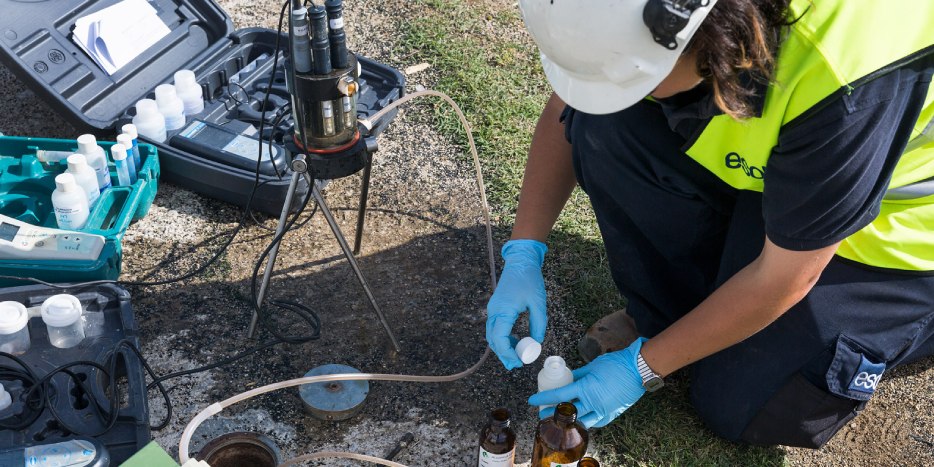
Water characterization and treatability testing provide information before larger-scale design or deployment decisions can be made.
In certain projects, pilot tests can be a particularly useful tool to compare treatment alternatives under representative conditions and reduce the uncertainty associated with the selection of a technology.
This is especially relevant when working with complex industrial waters or with contaminants for which there is no standard solution.
The challenge of emerging pollutants goes beyond purification
These highly complex polluting substances force us to expand the way we understand water management.
It is not only a matter of purifying water once the contaminant is present. It is also necessary to know the possible sources, prevent its entry when possible, control the processes and understand what happens to these substances when they pass from one medium to another.
In some cases, the solution may lie in acting on the source. In others, it will be necessary to improve treatment. And when the contamination has already reached the soil or groundwater, the problem may require environmental characterization and a different strategy for action.
Therefore, the management of emerging pollutants requires connecting process knowledge with environmental knowledge.
What role does ESOLVE play in the face of emerging pollutants?
At ESOLVE we address issues related to emerging contaminants from a perspective that combines diagnosis, characterization, engineering, and treatment.
We work on the management of wastewater, process water and groundwater, studying the characteristics of each problem to determine which alternatives may be technically feasible.
Our approach starts from a simple idea: before deciding how to treat a pollutant, you need to understand it. This may involve characterising the water, identifying the contaminants present, studying their behaviour, evaluating different alternatives and, when necessary, carrying out treatability tests or pilot trials before proposing a solution on a larger scale. Because not all emerging contaminants behave the same. And not all waters are the same, either.
Emerging pollutants: a challenge that will continue to grow
Emerging pollutants represent one of the challenges that is transforming water management. The advancement of analytical techniques makes it possible to detect more and more substances. At the same time, knowledge about their possible effects is increasing and the regulatory mechanisms aimed at controlling their presence are evolving.
For industry, this means that knowing which substances may be present in their processes and how they can reach the environment will become increasingly important.
And when a pollutant is already present, the challenge will be to move from detection to understanding: to know what we have, where it comes from, how it behaves and what we can do to manage it.
Because in the face of these new environmental substances, the solution does not necessarily start with a technology. It begins with understanding the problem.

Sorry, the comment form is closed at this time.