

25 Nov Soil and water bioremediation: techniques, applications, and when to use them
Soil and water bioremediation: techniques, applications, and when to use them
Did you know that some microorganisms naturally present in soil can help decontaminate it? This ability is the basis of bioremediation, a strategy that leverages biological activity to degrade or transform certain contaminants.
Its application can allow the treatment of contaminated soils and groundwater without the need to extract all the affected material. But it is not always possible nor is it the most suitable alternative.
What techniques exist? In what situations do they work? What should we consider before applying them?
How does bioremediation work?
Bioremediation mainly uses bacteria and other microorganisms capable of transforming certain contaminants through their metabolic processes.
Under suitable conditions, these organisms can degrade organic compounds, such as certain hydrocarbons or solvents, and transform them into less harmful substances. To promote their activity, it is possible to act on soil conditions: supplying oxygen or nutrients, modifying the chemical environment, or incorporating selected microorganisms.
The choice depends on the contaminant and the characteristics of the site. In some cases, treatment is carried out directly on the ground (in situ); in others, it is necessary to excavate the soil or extract water to treat it on the surface (on site).
Main bioremediation techniques
Although all use biological processes, the techniques pursue different objectives and are applied under different conditions.
- Bioventing: promoting soil degradation
Air or oxygen is introduced into the unsaturated area of the soil to stimulate microorganisms that degrade contaminants, especially certain hydrocarbons. It can be useful when contamination is found in the soil and there is sufficient permeability to distribute the air.
- Biosparging: acting below the water table
It consists of injecting air into the saturated zone to supply oxygen and promote the biodegradation of dissolved contaminants in groundwater. Its effectiveness depends on the characteristics of the aquifer and whether oxygen can be properly distributed.
- Biostimulation: activating existing microorganisms
Sometimes, microorganisms capable of degrading a contaminant are already present, but their activity is limited by lack of oxygen, nutrients, or other conditions. Biostimulation seeks to correct these limitations to favor the natural degradation process.
- Bioaugmentation: incorporating specific microorganisms
When the microorganisms present are not sufficient to degrade certain compounds, the incorporation of other selected ones can be considered. It is used, for example, in some chlorinated solvent treatment processes, although its effectiveness depends on whether they can be established and worked under field conditions.
- Monitored natural attenuation: leveraging on-site processes
It consists of allowing natural processes to act that reduce the concentration, mobility, or risk of contaminants, always with monitoring that shows the evolution is adequate. It can include biodegradation, but also processes such as dilution or adsorption, which do not necessarily destroy the contaminant. Therefore, it does not mean letting contamination disappear unchecked.
- Biopiles: treat excavated soil
The contaminated soil is excavated and placed in an area prepared to promote the activity of microorganisms. Factors such as aeration, moisture, and nutrients are controlled. It can be used for certain soils affected by hydrocarbons.
- Landfarming: promoting surface degradation
The excavated soil is spread in relatively shallow layers and is periodically turned over to facilitate aeration. It is mainly applied to certain soils contaminated by hydrocarbons and requires space and control of possible emissions and leachate.
- Phytoremediation: harnessing plant capacity
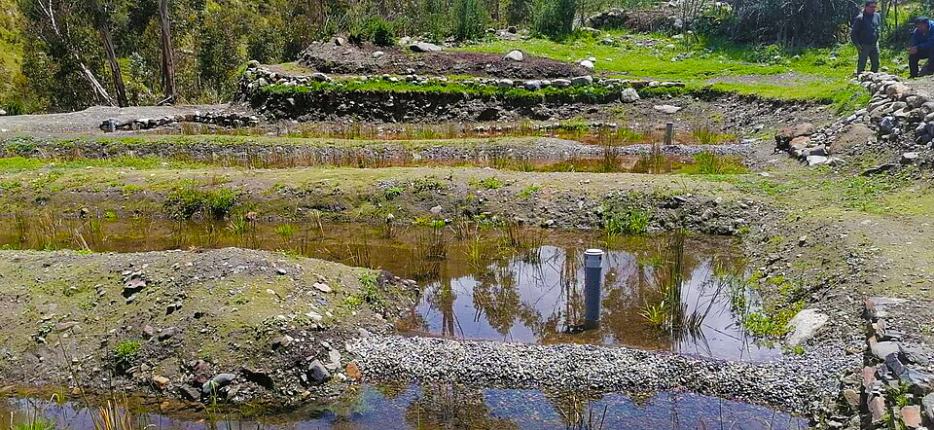
It uses plants and the processes associated with their roots to promote the degradation, extraction, or immobilization of certain contaminants. Its application depends on the plant species, the type of contamination, and the depth at which it is found.
When is bioremediation appropriate?
Bioremediation can be an effective alternative when the contaminant is biodegradable and there are conditions that allow microorganisms to develop.
However, there are several factors that can limit its application:
- The type of contaminant: not all compounds can degrade biologically. Metals, for example, are not destroyed by bioremediation, although some biological processes can modify their mobility or availability.
- Concentration: very high levels can be toxic or inhibit microbial activity.
- The characteristics of the soil: permeability, humidity, and chemical conditions determine the distribution of oxygen, nutrients, and microorganisms.
- The depth and distribution of contamination: these can make it difficult for treatment to reach all affected areas.
- The time available: biological processes can be slower than other alternatives and must be compatible with recovery objectives.
Sometimes, bioremediation should not be the first action either. If there are very concentrated sources or contaminating product in the free phase, it may be necessary to control them beforehand. In other projects, combining different technologies allows better addressing the different zones and phases of pollution.
How do you know if it will work at a site?
That a contaminant is biodegradable does not guarantee it can be successfully treated in any field. Before choosing a technique, it is necessary to know which substances are present, at what concentrations, where they are found, and how they behave.
The characterization of the soil and groundwater, along with geological and hydrogeological knowledge of the site, allows understanding the extent of pollution and assessing possible alternatives.
Then, laboratory treatability tests and, where appropriate, pilot tests help verify whether the biological process can operate under real conditions and what results can be expected.
At ESOLVE, we work on the development and application of soil and water bioremediation solutions within our research and innovation activities.
We also handle soil and water decontamination projects, from feasibility studies to the execution and monitoring of treatments.
Because every site has its own characteristics. And a technology that works in one field may not yield the same results in another.
Bioremediation offers important opportunities to recover contaminated soils and waters, but its effectiveness depends on understanding the problem and applying the right solution. It’s not just about harnessing the capacity of microorganisms, but about creating the conditions for them to do their job.

Sorry, the comment form is closed at this time.